
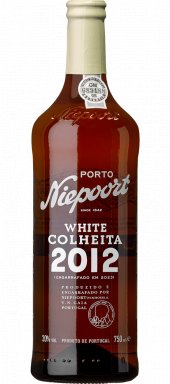
Niepoort White Port Colheita 2012
€ 39.90
| Producer | Niepoort |
| Region | Douro |
| Grapes | Códega, Rabigato, Viosinho, Arinto, Gouveio |
| Ageing | White Colheita, 10 years in cask |
| Alcohol | 20%vol | pH: 3.49 |
| Serving | Lightly chilled Ready to drink, but will keep for years Keeps 6-8 weeks once opened |
A 2012 white Colheita: hazelnut, apricot and honey.
Tasting note
Golden. A complex nose with hazelnut, apricot, citrus, honey and spice. Very delicate on the palate, yet structured. The ten years in cask have integrated the spirit into its aromatic complexity, and the spicy acidity typical of Niepoort’s white Ports balances the sweetness, with a long, lingering finish.
The story
A white Colheita comes from a single harvest and ages for at least seven years in cask.
2012 was dry in the Douro, delaying the growing cycle by fifteen days on average. The cold winter ensured even growth, and ripening was less hot than usual, with a good balance of acidity. Harvest took place in September: after the sorting table, the grapes and their stems went into granite lagares, where they were foot-trodden before fortification.
Food pairing
As a dessert wine with coffee and vanilla ice cream, fruit tarts and crème brûlée. Sublime with nuts and dried fruit such as raisins, peaches and apricots. Lightly chilled, also as an aperitif.
The producer
Niepoort was founded in 1842 in Vila Nova de Gaia and has belonged to the Dutch Van der Niepoort family for five generations. For more than a century it was a Port shipper without vineyards of its own. That changed when Dirk Niepoort joined his father Rolf in 1987: that year the family bought Quinta de Nápoles on the Tedo, in the Cima Corgo, followed by Quinta do Carril in 1988.
With the first Redoma in 1991 Niepoort became one of the pioneers of unfortified Douro wine, and a new winery was completed at Quinta de Nápoles in 2007. Dirk Niepoort also works in Bairrada, the Dão, Vinho Verde and the Mosel, and his son Daniel joined him at the helm in 2020. The Ports age in the cellars of Vila Nova de Gaia.
